


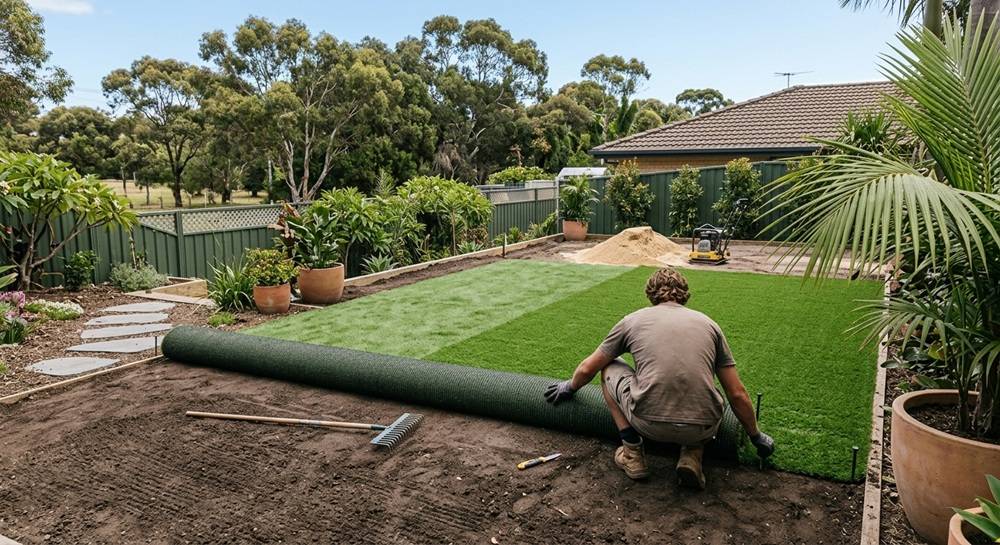
How to Lay Artificial Grass on Soil in Australia: Step-by-Step
If you are wondering How to Lay Artificial Grass on Soil in Australia this guide can help you.
Laying artificial grass on soil can be challenging and thus, requires proper steps to follow. Let this article guide you on all the necessary requirements.
Can You Lay Artificial Grass Directly on Soil?
Technically, artificial grass can be placed over soil, but laying it directly on bare soil is not recommended for a long-lasting installation. Soil can shift, settle and become uneven over time. It can also hold moisture and allow weeds to grow through the drainage holes in the turf.
A stable, well-prepared base is therefore one of the most important parts of artificial grass installation. Premier Grass recommends removing existing grass and soil, preparing the ground and installing a suitable crushed rock base before laying synthetic turf. By creating a firm, level surface, it helps drain water properly.
For most residential installations, the ground is excavated to around 80–100mm. The exact depth can vary depending on the site and existing ground conditions. Removing organic material is important because roots and other material beneath the turf can contribute to movement and subsidence later.
What You Need to Lay Artificial Grass on Soil
Gather all the right tools and materials before beginning. Having everything ready makes the installation easier and reduces the risk of damaging the turf.
• Artificial grass: Choose a product suitable for the intended use, such as a residential lawn, high-traffic area or pet space.
• Measuring tape: Measure the area carefully and plan where joins will be needed.
• Shovel and wheelbarrow: Used to remove existing grass and soil and move base material.
• Rake: Useful for clearing debris and levelling the ground.
• Plate compactor: Used to compact the crushed rock base and create a stable foundation.
• Weed barrier fabric: Helps reduce the risk of weeds growing through the turf.
• Crushed rock and crusher dust: These are commonly used to create the compacted base.
• Edging: Timber, plastic, metal or another suitable edging system helps keep the turf secure around the perimeter.
• Utility knife: Used to cut the artificial grass accurately.
• Joining tape and adhesive: Required when two or more turf sections need to be joined.
• Turf pins, nails or staples: Used to secure the grass around the edges.
• Broom or power broom: Used to spread infill and lift the grass fibres after installation.
How to Lay Artificial Grass on Soil:
1. Measure and plan the area
Measure the length and width of the area first. For irregular gardens, divide the space into smaller sections and calculate the total area. Allow extra material for trimming and cutting. Plan your joins before ordering or cutting the turf, and make sure all sections will have the grass fibres facing the same direction.
2. Remove the existing lawn and soil
Clear away existing grass, plants, roots, weeds and loose organic material. The aim is to reach a firm surface that will not easily move or settle.
3. Install the edging
Install suitable edging around the perimeter before completing the base. Edging gives the turf a defined boundary and helps prevent the edges from lifting or shifting. The edging can be made from treated timber, plastic, steel, brick or another suitable material depending on the design.
4. Prepare the base
Add the appropriate crushed rock aggregate and crusher dust to form the foundation. It is better to have 80–100mm base using approximately 70% crushed rock and 30% crusher dust for residential installations. Spread the material evenly before compacting it.
5. Compact and level the surface
Compact the base thoroughly using a plate compactor. This step is essential because an unstable base can eventually lead to dips, movement and an uneven lawn. Once compacted, use a straight edge or screed board to remove bumps and low spots. The finished base should look firm, smoother and perfectly graded for drainage.
6. Add a weed barrier
Place weed barrier fabric over the prepared base where appropriate. This provides an additional layer of protection against unwanted weed growth. Make sure the material is positioned neatly and does not create folds or raised sections beneath the turf.
7. Cut and join the turf
Use a sharp utility knife to trim the edges. Where two pieces meet, place the edges together without overlapping them. Use joining tape and suitable adhesive underneath the seam. Take your time with this step because poorly aligned joins can remain visible after installation.
8. Add infill and brush the grass
Apply the recommended infill evenly across the surface. Infill helps support the fibres, adds weight and can improve the feel and performance of the turf. At last, use a stiff broom or power broom to brush the fibres upright. Brush against the grain to give the lawn a fuller, more natural appearance.
Common Artificial Grass Installation Mistakes to Avoid
Skipping ground preparation is one of the most common mistakes. Rolling artificial grass directly over existing soil or lawn can leave you with an uneven surface and drainage problems.
Another mistake is failing to compact the base properly. If the foundation is loose, it may settle after installation and create dips. Always compact the base thoroughly and check the surface before laying the turf.
Poor drainage is another major issue. Water needs a suitable route away from the lawn. A properly prepared, permeable base and an appropriate gradient can help prevent puddling.
Conclusion
How to Lay Artificial Grass on Soil in Australia: Step-by-Step guide is the simplest way to follow. But even if you feel it is challenging on your end, you can directly call the professionals.
it is really important to call someone who has been serving reliably in the industry. Premier Grass is one such trustworthy company when it comes to Artificial grass. Their advanced techniques and expert team can lay the artificial grass on soil easily and perfectly. You can reach out to them directly on their official website. Add all the asked details and a team person will connect back to you.