


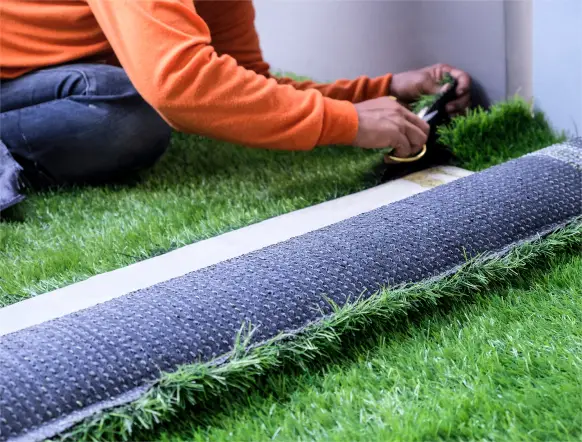
What Base Is Best for Artificial Grass
If you are wondering What Base Is Best for Artificial Grass, reading this article will answer that question.
Choosing the right base for artificial grass is just as important as choosing the turf itself.
For most outdoor artificial grass installations, a compacted crushed rock or aggregate base is a practical choice.
However, the best base depends on what is already on the ground, the drainage conditions and how the area will be used. Here is what you need to know before installing artificial grass.
Why Does the Base Matter?
The base creates a stable surface that helps prevent the artificial grass from shifting, sinking or developing uneven areas. Without proper preparation, the lawn can follow the shape of the ground underneath it.
A good base also plays an important role in drainage. Rainwater needs to move through the artificial grass and away from the surface rather than becoming trapped underneath.
This is particularly important in Australia, where outdoor areas can experience both heavy rainfall and periods of intense heat. A properly prepared base helps the lawn remain stable through changing conditions.
What Is the Best Base for Artificial Grass?
For many residential installations, a compacted aggregate or crushed rock base is one of the most practical options.
A common approach is to use a layer of crushed aggregate over the prepared ground, followed by a finer material that creates a smoother surface before the artificial grass is installed. The exact materials and depths depend on the site and the type of installation.
Your installer should assess the existing ground before deciding on the base. A sandy, well-draining area may require different preparation from heavy clay soil or an area where water already tends to collect.
Crushed Rock and Aggregate
Crushed rock and aggregate are commonly used because they can create a strong and stable foundation when properly compacted.
The material is spread across the prepared area and compacted in stages rather than simply being placed on the ground and covered with turf. Proper compaction reduces movement and helps create an even surface.
Can You Install Artificial Grass on Soil?
Artificial grass should generally not be laid directly over ordinary soil if you want a stable, long-lasting result. Soil can move, settle and become soft when wet. It can also allow weeds to grow through the surface if the area has not been properly prepared.
The usual process involves removing the existing grass and unsuitable topsoil, levelling the area and installing a suitable compacted base. The amount of soil that needs to be removed depends on the site and the finished height you need.
Simply placing artificial grass over an existing lawn may look acceptable initially, but problems can become visible as the ground underneath changes.
What About a Concrete Base?
Concrete can provide a strong and stable surface for artificial grass, but it is not always necessary. If you already have a suitable concrete area, artificial grass can sometimes be installed over it with the appropriate preparation. The concrete needs to be structurally sound, reasonably level and free from major cracks or drainage problems.
One thing to consider is drainage. Concrete does not allow water to pass through it in the same way as an aggregate base, so water needs to be directed towards suitable drainage points.
Artificial grass installed over concrete can work well for courtyards, balconies, patios and other hard surfaces, but the installation method may be different from installing turf over soil.
What Base Is Best for Clay Soil?
Clay soil can present additional challenges because it tends to hold water and can become soft when wet.
If artificial grass is being installed over clay, proper excavation and base preparation are particularly important. Simply adding a thin layer of aggregate over soft clay may not provide enough stability.
Depending on the site, the installer may need to remove unsuitable material, improve drainage and build up the area with appropriate compacted aggregate. The goal is to create a stable foundation that does not move significantly when the underlying soil becomes wet or dries out.
How Important Is Drainage?
The turf itself can have drainage holes or a permeable backing, but water still needs somewhere to go once it passes through the surface. If the ground underneath is compacted clay or another poorly draining material, water may collect below the turf.
Before installation, look at how water currently behaves in the area. Does it drain quickly after rain, or do puddles remain for hours? Are there nearby drains or slopes that can carry water away?
Fixing drainage during base preparation is much easier than trying to correct a problem after the artificial grass has been installed.
What Makes a Good Artificial Grass Base?
A good base should be stable, well compacted, reasonably level and appropriate for the site’s drainage conditions. It should not contain large voids or soft areas that could settle later. The surface should also be smooth enough to prevent bumps from showing through the finished turf.
The edges of the installation need attention too. Proper edging helps keep the artificial grass in position and gives the finished lawn a clean appearance.
The quality of the preparation often has a bigger effect on the final result than homeowners expect. Two lawns can use the same artificial grass but look and perform very differently because of differences in the base and installation.
Conclusion
For most outdoor artificial grass installations, a properly compacted aggregate or crushed rock base is a reliable foundation. But there is no universal answer to What Base Is Best for Artificial Grass.
The best choice depends on the existing soil, drainage, location and how the lawn will be used. Soil should normally be excavated and prepared rather than simply covered, while concrete can be suitable when an existing hard surface is already structurally sound and has adequate drainage.
If you want someone to help you, Premiere Grass can actually be the most reliable choice. You can visit their official website and ask for assistance.