


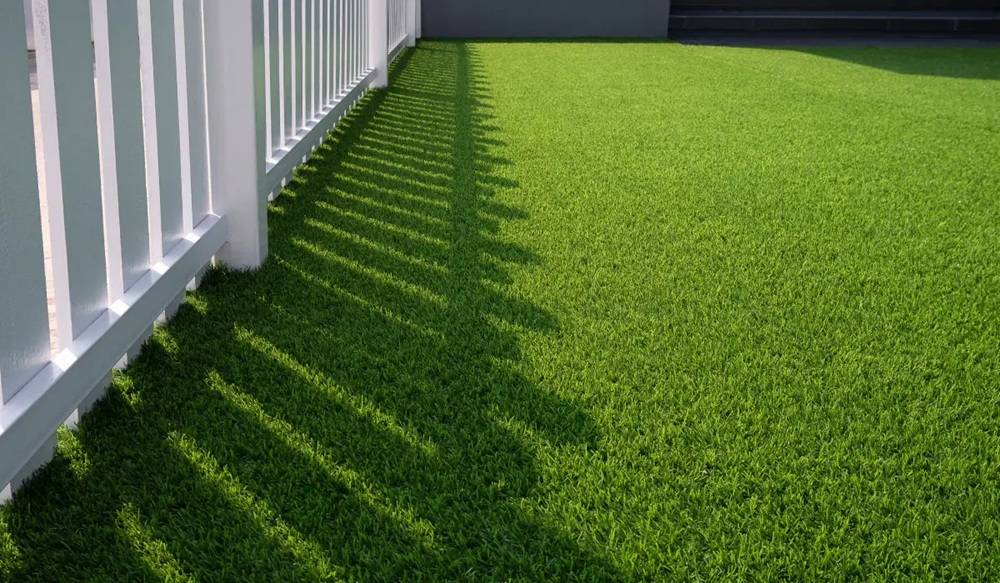
How to Lay Artificial Grass
Laying artificial grass is the type of home improvement project that might sound straightforward at first. However, careful preparation and attention to detail are absolutely essential throughout this process. When done right, artificial turf looks great and can last for decades. Done poorly, your fake turf may sag, joints may open up and end up costing even more to fix.
At Premier Grass, we’ve completed hundreds of residential and commercial installations. With that experience we’ve put together our knowledge and provided a guide on how to lay artificial grass properly. And if you’re looking for an expert installation, we are here to help!
Why proper installation is essential for fake turf
Synthetic turf is a long-term investment. While premium turf can last 15-20 years, installation is a key part of determining its longevity. Your grass is only as good as the base that it sits on, so preparation and installation must be done correctly at every single stage. If any shortcuts were taken, they’ll show up eventually… puddling, after rain, seams splitting, or lifting edges.
The correct installation process will also protect your warranty, which can be a lifesaver down the track if anything goes awry. Most quality synthetic turfs come with a warranty that requires the turf to be installed correctly for the warranty to remain valid. Therefore, if you skip steps or handle the process in the incorrect manner, it can void your cover entirely.
Therefore, following the correct installation process is a must.
Step 1: Pre-Installation planning and required tools
Great preparation should be non-negotiable, and it ensures that every following step is easier. Before you even pick up a shovel, take the time to plan the project properly (with expert assistance if required).
What tools do you need for synthetic turf installation?
The tools you’ll need to lay fake grass (assuming you’ve done required digging for base preparation already) include:
- A tape measure
- Chalk line
- Utility knife
- Plate compactor
- Straight edge
- Wheelbarrow
- Turf pins or galvanised nails
- Joining tape
- Adhesive
- A power broom / stiff brush.
You should always use protective equipment (PPE) as well, including steel capped boots, eye protection, gloves, and tough work clothing.
How to measure your yard and choose the right turf
Measure the total area in square metres, and be sure to add at least 10% on top for wastage/levy. You may add more wastage if there are particularly curvy or tricky sections that will require extra cutting. When it comes to picking the right fake grass for your space, a denser pile is great for areas with high foot traffic. Decorative spaces and lawns look better with a lush pile. At Premier Grass, we’re happy to help guide you to the best synthetic turf for your space.
Step 2: Ground preparation
Ground preparation is the foundation of a fantastic synthetic lawn, so it needs to be done right the first time. Many DIY installations fall off at this stage, either because they don’t dig deep enough (or go too deep), or the ground is not adequately prepared.
How deep should you dig for synthetic turf installation?
You should excavate to a depth of between 80-100mm for the best results. You may need to remove a little more in some areas, as too much organic material sitting below your turf can cause shifting and subsidence. The aim must be to reach a firm, stable base that won’t shift or settle later on.
Tree roots and edging
If you come across surface roots you’ll need to remove them, as these will be sure to cause headaches in future. Edging keeps your turf in place and prevents edges from lifting or moving. Options include treated timber, steel, and brick of concrete. Timber is affordable and looks good, steel is a cleaner finish for curved designs, and brick is great for spots that meet garden beds or paved areas. At Premier Grass, we can help you select the right edging for your space.
Step 3: Building a solid base
The base layer provides much needed stability for your fake grass. It also determines drainage performance, and a good base will provide that firm feeling underfoot.
Which base material is best for synthetic lawn?
Crushed rock and crusher dust are the most commonly used base material for residential fake turf installations in Australia. This rock is made from decomposed granite, and it compacts properly, drains well, and maintains a smooth surface beneath the layers. Blue metal screenings are another good option, especially for areas with a lot of rainfall.
How to compact and screed the base
You’ll need to use a plate compactor to compact your base material. The standard base for synthetic grass is an 80-100mm base with 70% of crushed rock and 30% of crusher dust. Compacting your base correctly is essential, as it will keep your lawn from moving later on. Once you’ve compacted your base, you’ll need to ensure that the base is flat and level with a straight edge or screed board. Remove all the ridges, bumps, and dips.
Step 4: Laying and cutting your synthetic grass
When the base is ready, you’re ready to roll out your new turf. The first step is to unroll your turf and let it breathe for about an hour. This is because artificial grass is often rolled up quite tightly, so will need some time to relax and settle before you start cutting and fixing, so that you avoid creases and an uneven finish.
Grain directions and cutting your fake turf to size
Synthetic grass has a grain direction, meaning the blades of grass will lean one way. Therefore, it’s important to make sure that each roll is laid with the grain pointing in the same direction. If you don’t line up the grains, your turf might not look quite right. After all, you’ll be laying eyes on it every day, so any visual irregularities will stick out like a sore thumb.
When sizing and shaping your grass, always cut from the back with a sharp utility knife. If you’re trying to cut curves, a series of small cuts first can make the process much easier than trying to cut the entire length in one go. Always take your time, and measure at least twice before you cut!
Step 5: Joining your turf to ensure an invisible seam
Achieving an invisible joint is essential in areas where you’re using more than one roll of turf. Installing fake grass becomes a little more complicated in this situation, which is why many people do choose professional installation. However, it is possible to keep your joins hidden with a meticulous approach.
Installing fake turf to keep joints invisible
First, you’ll need to butt the edges together so they’re touching, but not overlapping. Leave no more than a 3mm gap between the rolls. Then, trim the edges before joining together. Apply your joining tape under the seam and apply the adhesive to the full width of the tape to get a stronger hold. Don’t walk on the joint until the adhesive has fully cured. Once this is done, you can use a stiff brush to ensure the grain is running smoothly on both sides of the joint.
Step 6: Finishing touches
The final steps involve infill and grooming to really bring your newly laid synthetic lawn to life. Infill is important because it weighs your turf down, keeps the blades supported in an upright position, improves drainage, and improves the feel underfoot. One of the more common types of infill for residential synthetic lawns is silica sand.
At Premier Grass, we stock and recommend Zeofill, which is a great alternative to silica sand, especially for homes in heat prone areas and to reduce pet urine odors. These are specialised cooling granules that retain moisture and release it as the surface begins to heat up. This in turn reduces the surface temperatures on hot days.
Brushing your fake grass after installation
After you’ve applied your infill, you’ll need to brush and rake your grass to bring the blades to life and get those fibres to stand upright. You can use a power broom or a stiff brush to do this, working it down between the blades. Brush against the grain to get the pile standing up and enjoy that fresh, full appearance!
Common DIY pitfalls to avoid when installing fake grass
Here are a few common problems we see after DIY installation, and how to avoid them.
Poor drainage and issues with puddling water
Puddles of water is almost always caused by poor base preparation or insufficient gradient. Your base will need to have a gentle fall of at least 1% so that the water drains away properly, ideally towards a drain. It’s essential your base material allows the water to permeate freely as well, to avoid puddling.
Weeds growing through the edges of your turf
If you start to see weeds sprouting through the edges of your artificial grass, you need to make sure the area is properly secured and treated. A non-residual weed killer will help in this situation, and it should be applied before you lay your base. An extra layer of adhesive along the inside edge will provide another layer of protection against weeds.
Misdirected blades across multiple sections of turf
Sometimes, homeowners inadvertently lay two rolls in the incorrect configuration, so that blades end up facing opposite directions. This can be glaringly obvious when you look at the grass and bring about a patchy look. To avoid this problem, always double check the grain direction before laying your synthetic grass.
Uneven infill (or missing infill)
Laying infill is a really important step in the installation process, but it is one that some installers forget or neglect… or don’t do properly. If your infill is spread unevenly, it can result in blades that don’t stand up correctly, as well as lumps and bumps that feel strange underfoot, and don’t look good at all. Infill must be laid, and it needs to be spread correctly.
High-quality turf and expert installation with Premier Grass
At Premier Grass, we stock a range of excellent synthetic turfs, perfect for all kinds of spaces. We also provide expert installation across many major cities, making the process of purchasing and installing Synthetic turf as smoothly as possible for homeowners and businesses alike.
Get in touch with our team today to discuss your needs – we’re always happy to help.